Usage-Based vs. Subscription Pricing for APIs: Which Model Fits Your Program?
You've decided to monetize your APIs. The business case is clear. Leadership is on board. Now comes the question that stalls most teams for weeks: how do you price it?
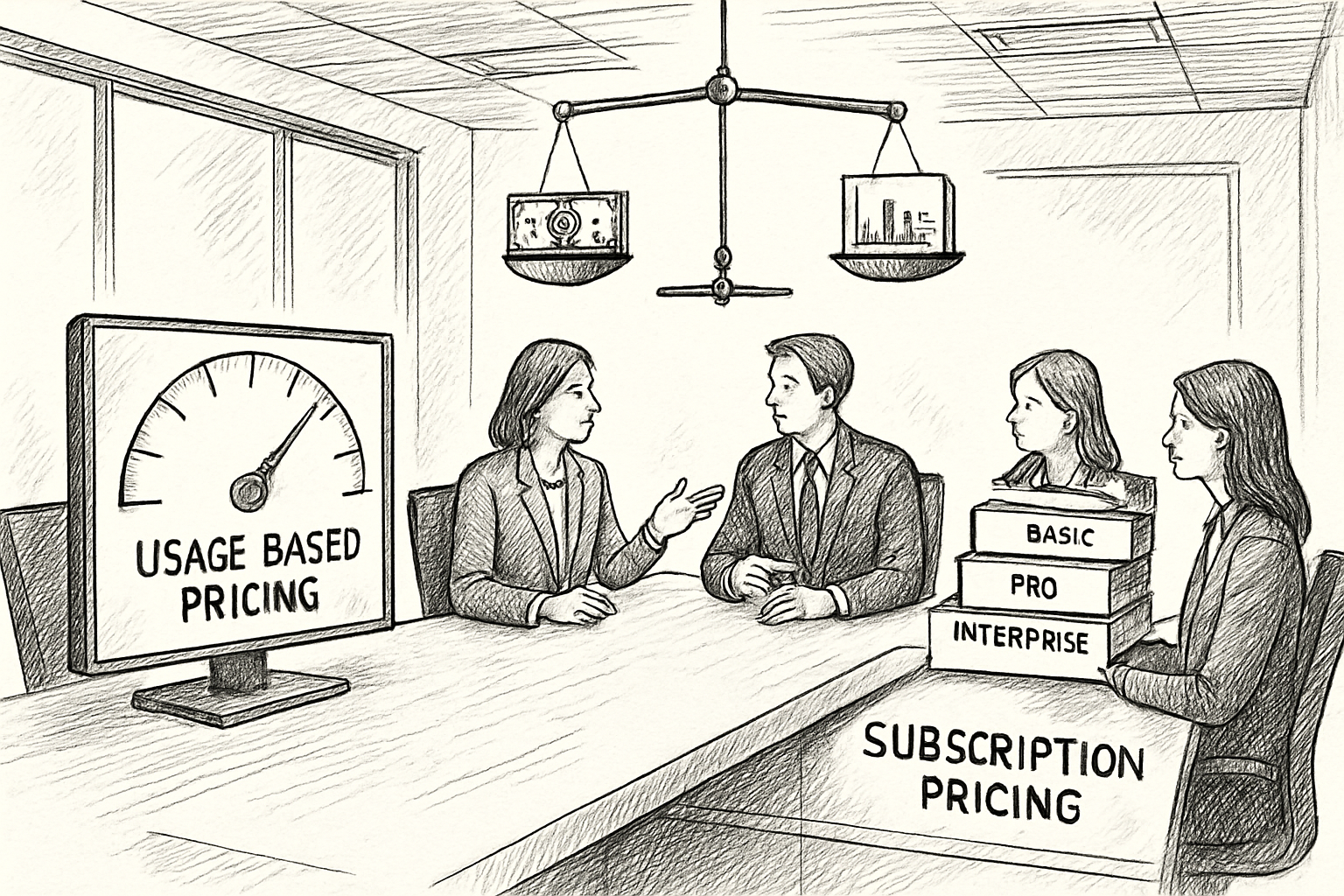
The two models you'll hear about most are usage-based pricing (partners pay for what they consume) and subscription pricing (partners pay a fixed recurring fee). Both work. Both have trade-offs. And picking the wrong one doesn't just leave money on the table. It creates friction that slows partner adoption.
This guide breaks down when each model fits, where each one fails, and how to choose without overthinking it.
What Usage-Based Pricing Actually Means
Usage-based pricing charges partners based on how much they use your API. The more calls they make, the more data they process, or the more transactions they complete, the more they pay.
There are two common structures:
- Graduated pricing. Different rates apply to different usage tiers. The first 10,000 API calls cost one rate, the next 50,000 cost less, and so on. This is the Stripe and Twilio model. Partners start small and pay less per unit as they grow.
- Volume pricing. A single per-unit rate is based on total usage for the billing period. Hit a higher volume tier and the lower rate applies to everything, not just the overage. Simpler to understand, but less granular.
In both cases, the partner's bill reflects their actual consumption. Low usage means a low bill. High usage means a higher bill. The pricing scales with the value the partner gets from your API.
What Subscription Pricing Actually Means
Subscription pricing charges partners a fixed recurring fee, typically monthly or annually. The fee buys access to your API up to a defined usage limit, and the partner pays the same amount regardless of whether they use 10% or 90% of their quota.
Subscription plans are usually structured as tiers:
- Free or sandbox tier. Limited access for testing and evaluation. No payment required.
- Standard tier. A mid-range plan for partners in production with moderate usage.
- Enterprise tier. Higher limits, better SLAs, dedicated support. Often negotiated as a contract rather than self-service.
The partner gets cost predictability. They know what they'll pay each month before the bill arrives. Your business gets revenue predictability. You know what's coming in regardless of usage fluctuations.
When Usage-Based Pricing Works Best
Usage-based pricing is the right choice when the value your API delivers is directly proportional to how much it's used.
Variable consumption patterns. If some partners make 1,000 calls a month and others make 1,000,000, a flat subscription forces you to either overprice the small partners or underprice the large ones. Usage-based pricing lets both pay fairly.
Partner growth alignment. When partners succeed, they use more. When they use more, they pay more. Your revenue grows with your partners' success. This creates a natural incentive to help partners grow, not just sign them up.
Low barrier to entry. Partners can start with minimal commitment. There's no upfront subscription cost to justify internally. They try the API, usage grows organically, and the bill follows. This is why developer-first companies like Twilio and Stripe use this model. It removes the procurement conversation from the early stages.
AI agent consumers. As AI agents increasingly consume APIs through protocols like MCP, usage patterns become bursty and unpredictable. A fixed subscription doesn't map well to an AI agent that might make zero calls one day and ten thousand the next. Usage-based pricing, especially credit-based burndown, fits this pattern naturally.
When Subscription Pricing Works Best
Subscription pricing is the right choice when partners need cost certainty and your API delivers consistent value regardless of call volume.
Predictable budgets. Enterprise partners often need to know exactly what they'll spend before they commit. A fixed monthly fee is easier to get through procurement than an estimate that says "it depends on usage." Subscription pricing removes the uncertainty that slows down purchasing decisions.
Consistent value delivery. If your API provides access to a dataset, a dashboard, or a capability that's valuable whether the partner calls it once a day or once an hour, usage-based pricing penalizes frequent use. A subscription says "this is yours, use it as much as you need."
Simpler operations. No usage metering to configure, no complex billing calculations, no surprises on invoices that trigger partner complaints. You set the price, partners pay it, and the billing conversation is over. For teams that are monetizing for the first time, this simplicity can be the difference between launching in weeks and launching in months.
Revenue stability. Subscription revenue is predictable. You can forecast it, plan around it, and report it to leadership as recurring revenue. Usage-based revenue fluctuates with partner activity, which makes financial planning harder.
Where Each Model Fails
Both models have blind spots. Understanding where they break helps you avoid choosing the wrong one.
Usage-based pricing fails when:
- Partners can't predict their costs and procurement won't approve an open-ended commitment
- Your billing infrastructure can't accurately track and attribute usage to individual partners
- Usage doesn't correlate with value (a partner makes millions of calls but only gets marginal benefit from each one)
- You need stable revenue to justify the program's budget to leadership
Subscription pricing fails when:
- Usage varies wildly between partners and a single price tier can't accommodate the range
- Small partners are priced out because the lowest tier is still too expensive for their use case
- Heavy users consume far more than the subscription covers and you can't capture that value
- Partners resent paying full price during months where they barely use the API
The Hybrid Approach: Why Most Programs End Up Here
The cleanest answer to "which model should we use?" is usually: both.
A flat-fee-plus-overage model gives partners the predictability of a subscription with the fairness of usage-based pricing. Partners pay a base fee that includes a usage quota. If they stay under the quota, their bill is predictable. If they exceed it, the overage charges reflect their actual consumption.
This is the "Goldilocks" model for most API programs. It solves the procurement problem (fixed base fee), protects you from underpricing heavy users (overage), and doesn't penalize light users (they just stay within their included quota).
Another common approach is offering different pricing models to different partner segments. Self-service partners get usage-based pricing because it's low-friction. Enterprise partners get contract-based subscriptions because that's how they buy. Strategic partners get custom terms because the relationship warrants it. Your pricing doesn't have to be one thing. It has to match how your partners buy.
How to Decide Without Overthinking It
Start with three questions:
- How variable is usage across your partner base? If it varies by orders of magnitude, lean usage-based. If it's relatively consistent, subscription works fine.
- How do your partners buy? If they're developers with credit cards, usage-based removes friction. If they're enterprises with procurement teams, subscriptions are easier to approve.
- Can you track usage accurately today? If your gateway and portal can attribute every API call to a partner and a plan, usage-based pricing is straightforward. If you can't, start with subscription while you build that capability.
If you're still unsure, start with flat-fee-plus-overage. It gives you the data to see how partners actually use your API, and you can adjust from there. The first pricing model is a hypothesis, not a commitment. Measure which plans partners choose, where they churn, and where they push against limits. Then iterate.
For a broader look at all the pricing models available, including credit-based burndown and contract pricing, see the complete guide to API monetization. And if the bigger question is still whether monetization makes sense at all, start with how to turn your API program from cost center to profit center.