How to Build a Technology Partner Ecosystem with APIs (2026 Guide)
The best API programs aren't measured by traffic. They're measured by partner revenue.
Most teams figure this out too late. They build a solid API, write decent docs, sign a few partners, and then wonder why the program isn't moving the needle. The answer, almost every time, is the same: they built an API, not a partner program.
Building a technology partner ecosystem is a different discipline. It requires structure, self-service infrastructure, and a clear revenue model. When you get it right, partners onboard themselves, usage turns into measurable revenue, and leadership stops calling your team a cost center.
This guide walks you through exactly how to build one.
What is a technology partner ecosystem?
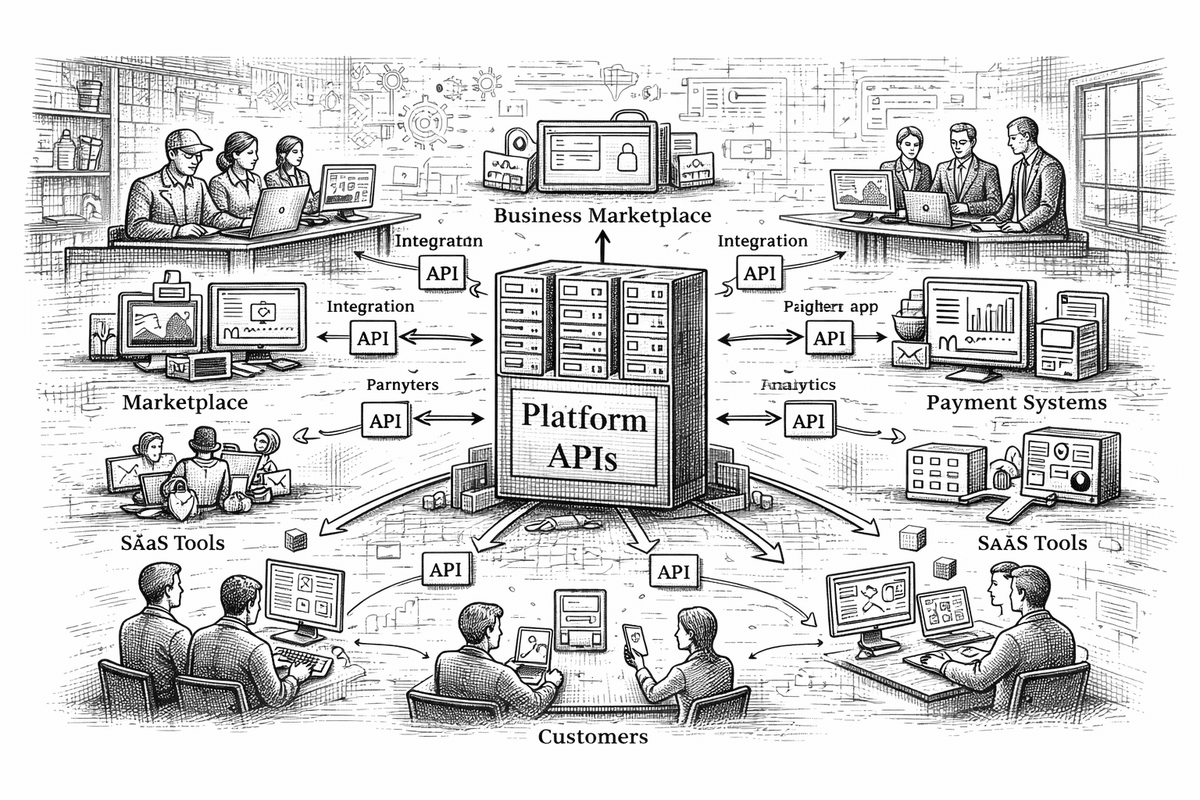
A technology partner ecosystem is a structured network of third-party companies that integrate with your platform through APIs to deliver mutual value. Each partner builds on your APIs to extend your product's capabilities, reach new markets, or serve customers you can't reach alone.
Unlike a reseller or referral program, a technology partner network is built on technical integration. Partners connect to your APIs directly, build features on top of your platform, and create dependency that compounds over time.
Why partner networks matter for API programs
A well-run API partner network creates three compounding advantages that are hard for competitors to replicate.
Network effects. Every new partner makes the platform more valuable to existing partners. More integrations attract more developers, which attracts more partners. This flywheel is the core of every durable API business.
Revenue diversification. When partners pay for API access, your revenue stops depending on a single sales channel. API monetization creates a predictable, recurring revenue stream that runs parallel to your core product.
Competitive moat. A partner program with 100 live integrations is not something a competitor can copy in a quarter. The integrations, the trust, and the data you accumulate are structural advantages.
Here's the thing most platform teams miss: none of these advantages activate automatically. You have to build the infrastructure to enable them.
The 4 stages of building a partner program
Building a technology partner ecosystem follows a predictable path. Here are the four stages and what actually matters at each one.
Stage 1: Foundation -- Define your API products
Before you can onboard partners, you need something worth onboarding them to.
Most companies skip this and pay for it later. If every partner gets a custom integration, you're not running a partner program -- you're running a bespoke services business. One real customer said it well: "There are between 500 and 700 products that use our API. Each integration is effectively one-off."
That's not a partner program. That's 700 manual projects with 700 different support contracts.
The foundation stage is about turning your APIs into products: defined packages, clear terms, standard pricing, and a sandbox environment where partners can test before they commit. You also need a formal agreement process -- terms of service, data-sharing rules, and approval controls -- so you're not exposing production data to every partner who asks.
What to do at this stage:
- Package your APIs into defined products with clear tiers
- Write standard terms of service and data-sharing agreements
- Build a sandbox environment that mirrors production
- Define which partner types get access to which products
Stage 2: Launch -- Onboard your first partners
Once you have an API product, you need your first wave of partners. This is where most teams rely on personal relationships and referrals. That works for the first 10 partners. It doesn't work for 100.
The launch stage is about proving the motion works. Pick five to ten strategic partners, run them through your onboarding process, and document every friction point. Where do they get stuck? What questions do they ask repeatedly? What do they need from your engineering team that they shouldn't need?
Those friction points become your product roadmap for Stage 3.
What to do at this stage:
- Manually onboard five to ten pilot partners
- Track every support touchpoint and question
- Measure time from sign-up to first successful API call
- Identify which steps require your engineering team's involvement
Stage 3: Scale -- Self-service onboarding and monetization
This is the stage where most partner programs get stuck. They've signed 20 partners manually and the team is at capacity. The business wants to add more. The answer everyone reaches for -- "hire more partner managers" -- is the wrong one.
The right answer is self-service.
Partners today expect to onboard without a sales call. They compare you to Stripe, Twilio, and every other API they've integrated. If your onboarding requires three emails, two calls, and a custom Slack channel, they'll move on.
Self-service means partners can register, agree to your terms, access sandbox credentials, read documentation, and make their first API call -- all without anyone on your team lifting a finger. That's the bar.
This is also the stage where monetization comes in. If you've been giving away API access to prove adoption, Stage 3 is when you start capturing the value you've been creating. Partners who are already integrated are the easiest customers to convert to paid plans.
What to do at this stage:
- Build a self-service developer portal with registration and credential management
- Add a monetization layer with usage-based pricing and automated billing
- Implement approval workflows so you control who gets production access
- Automate the sandbox-to-production journey as much as possible
See how Apiable approaches self-service partner onboarding and developer portal infrastructure.
Stage 4: Optimize -- Data-driven partner management
Partners are live. Revenue is flowing. Now the question is: which partnerships are actually working?
Without data, you manage partners based on whoever shouts loudest. The partner who emails your team every week gets attention. The quiet partner who drives 40% of your API revenue gets ignored. That's not a strategy.
The optimize stage is about using usage analytics to make every decision. Which partners are hitting rate limits and need an upgrade? Which signed up six months ago and never made a single API call? Which products are driving the most revenue per partner?
This data also gives you the internal credibility to ask for more investment. When leadership asks "Is the partner program worth it?" you need a number -- not a story.
What to do at this stage:
- Implement partner analytics across the full funnel (signup to revenue)
- Track time-to-first-call and partner activation rates by cohort
- Build internal dashboards that show API revenue per partner
- Use data to tier your partners and allocate support resources accordingly
The role of APIs in a technology partner network
APIs are the connective tissue of any partner network. They're what makes a partner program scalable rather than bespoke.
Without APIs, every integration is a custom project. With well-designed API products, a partner can integrate once and get access to your core capabilities. You define the rules, the pricing, and the access levels. They build on top. No custom work required on your end for each new partner.
The shift this creates is significant. Instead of your engineering team being the bottleneck on every new partnership, partners can self-serve. They read your docs, make a test call in your sandbox, and go live. Your engineers focus on improving the API products -- not supporting one-off integrations.
One pattern that consistently accelerates this: building a developer portal that handles credentials, documentation, sandbox access, and billing in one place. When partners can get everything they need without contacting your team, the pace of partner acquisition stops being limited by your headcount.
The app store model: from integration to published app
For many partner ecosystems, the end goal is not just an API integration. It's a published app in your marketplace that your mutual customers can discover, install, and use.
This is the model behind Shopify, HubSpot, Slack, Salesforce, and most mature platform ecosystems. The partner journey follows a clear path:
- Join the developer portal. The partner signs up, gets credentials, and accesses your API documentation. This is the entry point for anyone building on your platform.
- Build the app. The partner builds their integration using your APIs, tests it in a sandbox, and packages it as an app with a name, description, logo, and configuration flow for end users.
- Submit for review. The partner submits their app for your team to review. You check quality, security, branding, and compliance. Once approved, the app gets published in your app store or marketplace.
You can see this pattern across industries. Gorgias, a customer support platform, runs their developer portal with exactly these three steps. Partners sign up, build their app using the Gorgias API, and submit it for review. Public apps go through an approval process before appearing in the Gorgias App Store. Private apps skip the review and go straight to use. Personify Health follows the same model in healthcare: their developer portal feeds directly into their partner marketplace, where customers browse and activate integrations for their wellness platform.
The result: your customers browse a catalog of ready-made integrations. They install a partner's app in a few clicks. The partner gets distribution. You get a richer platform. Everyone wins.
This model works because it gives partners a clear finish line. "Integrate with our API" is vague. "Build an app and get it listed in our marketplace" is a concrete goal with a concrete reward: access to your customer base.
Not every partner program needs a full app store on day one. But if your ecosystem involves partners building features that your end customers use directly, the app store model is where you're headed. Plan for it early, even if you start with a simple partner directory. The underlying infrastructure -- developer portal, API products, approval workflows, usage tracking -- is the same whether partners ship a raw integration or a polished app.
Common pitfalls when building a partner program
These are the mistakes that consistently slow down or stall partner programs. Most of them are avoidable.
Manual onboarding that doesn't scale. "We don't have a formalized way to get started -- it requires coordination on our side every time." That's a real quote from a real customer. If your onboarding requires your team to be involved in every partner signup, you've built a linear process in an exponential world. Every new partner adds load. Self-service is the only path that compounds.
No revenue model. Giving away API access to drive adoption makes sense early. Doing it indefinitely means your partner program is a cost center with no path to ROI. Partners who are already integrated are your warmest audience for a paid offering. Build the pricing model before you need it.
No visibility into partner value. "We have no analytics on partner API usage." Without usage data, you can't answer the most basic questions: Which partners are growing? Which APIs are being used? Which partnerships are worth doubling down on? Flying blind on partner performance means every investment decision is a guess.
Treating all partners the same. Not every partner deserves the same level of support, access, or pricing. Strategic partners who drive significant revenue need dedicated products and dedicated attention. Everyone else can use the standard tier. Failing to segment means you over-invest in low-value partners and under-invest in high-value ones.
Over-engineering the portal before you have partners. Building a custom developer portal from scratch takes six to eighteen months. By the time you launch, your partner program has been on hold for over a year. Start with the minimum viable portal that gets partners to their first API call. Improve it based on what real partners actually need.
How to measure partner program success
Measuring a partner program well means tracking the full journey -- from partner discovery to live integration to revenue contribution.
Time to first API call. How long does it take a new partner to go from registration to a successful API response? This single metric tells you more about your developer experience than any survey. If the average is two weeks, your onboarding has friction. If it's under 30 minutes, you're doing something right.
Partner activation rate. Of all the partners who register, how many actually make it to production? A high registration rate with a low activation rate means your top-of-funnel is working but your onboarding is broken. Track conversion at each stage of the funnel.
API revenue per partner. Not all partners are equal. Tracking revenue per partner tells you which integrations are worth prioritizing for support, new features, and co-marketing. It also gives you the data to prove ROI to leadership.
Partner growth rate. Month-over-month growth in active partners tells you whether your partner program is gaining momentum or plateauing. A healthy program should compound -- each new partner should make it easier to attract the next one.
Partner churn. Partners who go live and then stop using your APIs are a signal. Either the integration isn't delivering value, the pricing is wrong, or the documentation is failing them. Track churn separately from activation -- they point to different problems.
Learn more about API monetization metrics and models.
Key takeaways
- A technology partner ecosystem is a structured, API-driven network where third parties integrate with your platform to create mutual value
- The best partner programs move through four stages: Foundation, Launch, Scale, and Optimize -- and most get stuck at Stage 3 because they haven't built self-service infrastructure
- Self-service onboarding is the only model that scales. Partners expect to integrate without a sales call or engineering support
- Monetization should be built before you need it. Partners who are already integrated are your easiest conversion targets
- Without usage analytics, partner management is based on gut feel. Data is what turns a cost center into a profit center
- Measure what matters: time to first API call, activation rate, revenue per partner, and partner growth rate
Ready to build your partner program?
If your current partner program relies on manual onboarding, has no revenue model, or can't answer basic questions about which partners are driving value, you're not alone. These are the three most common barriers we see.
Apiable is built to solve all three. Partners onboard themselves through a self-service portal. Usage tracking and billing are built in from day one. And usage analytics give you the data to prove the program's value to leadership.
See the platform: Explore the API developer experience and API portal capabilities.
Talk to us: Book a demo and see how a working partner program looks in practice.